Over Thought: Rumors Galore Ahead of 4 Nations

Over Thought is a semi-regular series that takes a look at some of the more interesting and notable tidbits shared by Elliotte Friedman in his weekly 32 Thoughts columnEach edition will feature some unique thoughts on the state of the Sabres or league as a whole before digging in on some of the notes from Freidman’s weekly column.

The Sabres will probably welcome this 4 Nations break with open arms after spending the weeks in the crosshairs of the NHL’s water cooler. The fallout from the Tage Thompson hit will probably linger beyond the 4 Nations Face Off as well, but I doubt it will be quite as focused as it was for the last few days. 

Buffalo wasn’t part of the trade flurry ahead of the 4 Nations Face Off, not that they had to be, but there has been an awful lot of chatter about who is and isn’t available lately, setting the table for a very interesting week leading up to the March 7 trade deadline. 
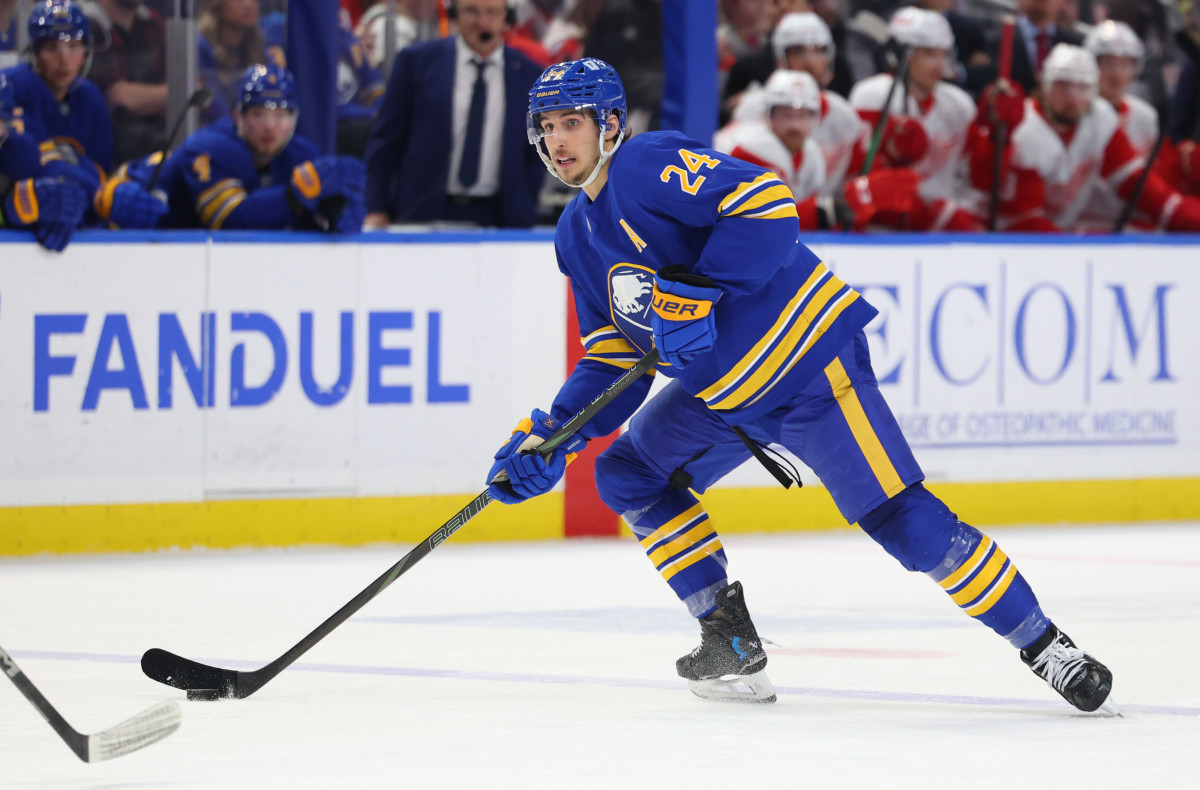
What sort of long term effect this saga has on the Sabres will be fascinating to follow. Darcy Regier allowed the Milan Lucic hit completely reshape how he was building his roster. Buffalo put an onus on getting tougher after that incident and two years later they were in a tear down rebuild. This iteration of the Sabres doesn’t have any recent success to look back on, so any sort of retooling wouldn’t have quite the same impact as it did in 2011. Additionally, Kevyn Adams was very outspoken about his desire to shift Buffalo’s identity and bring in players who would make them harder to play against last summer. The result was a remade fourth line and the addition of Dennis Gilbert on the blueline. On Sunday, only one of the three newcomers to the fourth line was in uniform (one was in Rochester) and Gilbert didn’t see the ice in the third period. 

The Sabres have plenty of items on their to-do list to get back to the playoffs, and I’d worry if toughness suddenly trumped some of the other, more pressing matters. I maintain that the solution to these issues is only going to be found if the group comes around to the realization of how they have to play. You can add tough guys left and right, but if there isn’t a desire in the room to have the fortitude and accountability to stand up in these situations, almost any acquisition will fall flat. In addition, any player the Sabres do pursue in the name of toughness needs to be able to play. Sam Bennett, for example, is the sort of guy who embodies the attitude the Sabres need to carry. He’s also a capable forward in this league. Compare him to Sam Lafferty, who is watching the Sabres from the press box. That’s the sort of calculus that will be needed if the Sabres once again try and address their toughness and identity this offseason. 

Continue reading
How Will the Increasing Cap Affect the Sabres?

The salary cap is going up. Way up. 

The NHL has confirmed salary cap figures for the next three seasons, including a caveat that the numbers could be adjusted further (up or down) if necessary. But as it stands, the salary cap figures for the next three seasons will be as follows:

2025-26

Upper Limit: $95.5m

Lower Limit: $70.6m

2026-27

Upper: $104m

Lower: $76.9m

2027-28

Upper: $113.5m

Lower: $83.9m

That’s about $7 million in growth this summer and about $9 million in the following two years. Notably, the cap floor in 2027-28 will be just $5 million lower than this year’s cap. It’s also $2 million more than the Sabres have committed to the cap this season. 

The rapid cap growth will have implications throughout the league, especially for teams that typically operate on an internal budget. The possibility of a widening gulf between big and small spenders and what it could mean for the league’s competitive balance shouldn’t be overlooked. Whether or not Terry Pegula finds another oil well to drill, the increase to the cap creates new opportunities and flexibility for the Sabres. 

Continue reading

Who is Next in Line for the Sabres Hall of Fame?

Rob Ray became the 44th member of the Buffalo Sabres Hall of Fame on Friday night, a well deserved honor for one of the most beloved players in franchise history. Ray’s induction comes two years after Ryan Miller was inducted in conjunction with his jersey retirement, the first player to be inducted in nearly 10 years. 

It wasn’t long ago that the Sabres Hall of Fame was a stagnant, forgotten aspect of the franchise. After Miller and Ray’s inductions, it would appear that the Sabres Hall of Fame has been revived. 

The priority for the Sabres now should be to find a better way to share the Hall of Fame with the fan base. Currently, the only physical display is the wall of names and photos in the Sabres hallway. It’s a very nice exhibit but few fans ever get to see it in person. There should be a far more substantial celebration of the team’s Hall of Fame in the arena. I’ve long lobbied for the Sabres to build an interactive Hall of Fame and museum in the space behind the Sabres Store and my opinion hasn’t changed. There is a ton of room back there and I expect most of the office space to be cleared once the Canalside Gateway building opens. It is a perfect venue for a walk through attraction that fans can visit on game days or summer afternoons alike. I don’t need to re-hash that entire post, but devoting space to the Sabres Hall of Fame and other memorable aspects of team history seems like a slam dunk for the Sabres to pursue. 

As for the members of the Hall of Fame, it’s encouraging that the practice has returned. With only two new inductions in 10 years, it’s hard to say what sort of cadence the team will take up for new inductions. Will this be an annual event? Bi-annual? Or will the ceremonies come intermittently as the team sees fit to nominate and select someone for induction? 

My hope is for this to become a regular fixture on the Sabres calendar. There are enough worthy candidates to stretch on for 10 seasons with a new induction each year and even more if you care to get a little more creative with the standards for entry. Here is a list of the next most worthy candidates (in no particular order) for the Sabres Hall of Fame and a case for induction for each one. 

Continue reading

Five Things to Watch in the Stretch Run

By the end of this weekend, the Sabres will only have 30 games left to play meaning by the time they wrap up with the Devils on Sunday, they’ll be firmly in the stretch run. 

The season went up in flames weeks ago, ending any realistic hope of ending Buffalo’s playoff drought. While an Andrew Hammond-esque miracle run could put the Sabres back into the playoff race, the reality is that these final 30 games will be little more than a formality as the club prepares for the offseason and the 2025-25 season. 

While the outcome of the games won’t matter much, there are still a few storylines worth tracking in the coming weeks and months as the Sabres inch closer to game 82. 

Continue reading

Over Thought: The Miller Drama Endures

Overthought is a semi-regular series that takes a look at some of the more interesting and notable tidbits shared by Elliotte Friedman in his weekly 32 Thoughts columnEach edition will feature some unique thoughts on the state of the Sabres or league as a whole before digging in on some of the notes from Freidman’s weekly column.

This week’s 32 Thoughts was a bit shorter than usual, so it’s not overflowing with threads to pull on, but three are still a few good tidbits. Friedman starts the column with a deep dive on the potential growth in the salary cap. He points out that not all of the league’s teams may be willing to spend up to a cap that’s north of $100 million per year, raising the question of what the league would do if they reach a cap ceiling that only a handful of teams would be willing and capable of spending to. 

Assume for a moment that figure it $110 million as Freidman suggests. If only a few teams spend to that limit, the league could quickly be back in a situation akin to the days before the 2004-05 lockout. If the league’s parity was threatened by the ever increasing cap, I’d like to know if the league would need to take action to either depress the cap ceiling or create another function to adjust for smaller revenue clubs. It’s a lot easier to come up with plans that help clubs be more competitive in the cap landscape – the proposed tax adjustment comes to mind – so I’ll be interested to see how this all develops. 

Continue reading

Sabres, Adams Inaction in the Face of A Lost Season is Damning

Tristan Jarry was the latest victim of the NHL waiver wire and the third notable move made by Pittsburgh Penguins general manager Kyle Dubas this year. Meanwhile, the team sitting last in the Eastern Conference has yet to make any meaningful change to their roster. 

The Penguins have struggled to keep their head above water this year, sitting five points out of a playoff spot while sporting a conference-worst -36 goal differential. After missing the playoffs last season, the Penguins are entering a transitional period as the glory years led by Sidney Crosby, Evgeni Malkin and Kris Letang wind down. Yet, despite their struggles to stay in the Eastern Conference playoff race, the Penguins and Dubas have taken action, bringing in Phillip Tomasino and dealing Lars Eller in November and now waiving Jarry after the netminder’s subpar play continued to haunt the team. 

The same cannot be said of Kevyn Adams and the Sabres, whose most notable accomplishments this season include a disastrous press conference, a 13-game losing streak and a dreadful loss a day after the owner joined the team on the road trip to reinforce the club’s belief in the roster. It’s become quite evident that the answer is, in fact, not in the room, yet Adams has not made a single change to the roster he constructed. 

Continue reading

Over Thought: Rumor Season is Upon Us

Overthought is a semi-regular series that takes a look at some of the more interesting and notable tidbits shared by Elliotte Friedman in his weekly 32 Thoughts columnEach edition will feature some unique thoughts on the state of the Sabres or league as a whole before digging in on some of the notes from Freidman’s weekly column.

One piece of the post mortem on Hockey Canada and the World Junior Championship that I found particularly interesting was the focus on their decision to lean into role players over skill. Canada has some of the deepest skill to draw from for the WJC but opted for a more well rounded roster. Many have pointed out that they would’ve been better off leaning into their skill for a short tournament. I believe something to the effect of “In a short tournament, skill can grit but grit can’t skill” was said with respect to their roster.

It made me think about the final choices made by the Team USA roster for the 4 Nations Face Off. While the players who rounded out the US roster are still proven producers at the NHL level, they do draw some parallels to what happened with the Canadian WJC team. Brock Nelson, Vincent Trocheck and Chris Kreider are more than capable NHLers, but will the Americans regret not having Clayton Keller or Cole Caufield once the tournament is rolling? It’s something I referred to when the rosters came out, but as this is a bit of fan service that will tease interest for next year’s Olympics, there was a perfect opportunity for the various decision makers to be more creative with their choices. It didn’t need to be a Very Serious tournament, yet the rosters were built as such. As we just saw in an event with actual stakes, trying to find a perfect fit for every role vs. finding the best possible players didn’t work out for the Canadians. Hopefully the US. doesn’t fall victim to the same issue.

Continue reading

Assessing a Pivotal Season at the Halfway Point

In a year when virtually everything had to go right for the Sabres, it feels like it’s all gone wrong.

As the Sabres prepared to open training camp for the 2024-25 season, the club was banking on a lot of things to go right in order to break their playoff drought. There weren’t too many constants to lean on from the prior campaign while improvement from the young core and better health were among key talking points for a team desperate to break their playoff drought. In a way, it felt like this was a season of “What if?” Or “If ____, then ____.” At the halfway point of a year that has been defined by a 13-game losing streak, it’s hard to say that anything Kevyn Adams and the Sabres had gambled on have paid off. In some respects, it was fair to be optimistic about certain aspects of the club. While other decisions seemed questionable at best. Little has worked for the Sabres this year, including some of the key tent poles from a pivotal summer. 

Continue reading

The Instigator Podcast 13.16 – Is Elias Pettersson a Target for the Sabres?

Rumors are swirling around Vancouver as the reported animosity between JT Miller and Elias Pettersson won’t go away. As the Canucks are said to be listening on both, many are wondering whether or not the Sabres can, or should make a play for the former 100-point scorer. We break down Pettersson’s credentials, what sort of package the Sabres would need to fork over and where he would fit if the Sabres were to pull the trigger. 

The second half of the show is devoted to a bit of a midseason check in. We hit on a few of the key talking points from the offseason and break down what’s gone right and wrong (mostly wrong) for Kevyn Adams and the Sabres.

You can find The Instigator Podcast wherever you listen to podcasts:

iTunes
Spotify
Stitcher
iHeartRadio
TuneIn
Google Play

The Instigator Podcast 13.15 – Sabres and Wings Cooking Up A Deal?

The rumors of the Sabres and Wings scouting each other have sparked rumors that a deal between the two clubs could be coming. We spend some time talking about what the two teams could be working on and which players could be involved. From big ticket trades to lower stakes swaps, we try and work out what could be on the horizon. 

Beforee getting to the trade discussion, we open the show with a chat about the UNLV vs. Denver game and UNLV’s impreessive upset of the defending NCAA champs. Our conversation touches on what the win meant for UNLV and the ACHA along with highlighting some key differences between the two levels that shouldn’t be forgotten when discussing the outcome of the game. 

You can find The Instigator Podcast wherever you listen to podcasts:

iTunes
Spotify
Stitcher
iHeartRadio
TuneIn
Google Play