Overthought – A Missed Opportunity on the 4 Nations Rosters

Overthought is a semi-regular series that takes a look at some of the more interesting and notable tidbits shared by Elliotte Friedman in his weekly 32 Thoughts column. Each edition will feature some unique thoughts on the state of the Sabres or league as a whole before digging in on some of the notes from Freidman’s weekly column.

The initial rosters for the 4 Nations Face-Off have been set and barring injury replacements, the Sabres will only be sending two players to the event. Rasmus Dahlin with Sweden and Ukko-Pekka Luukkonen with Finland. 

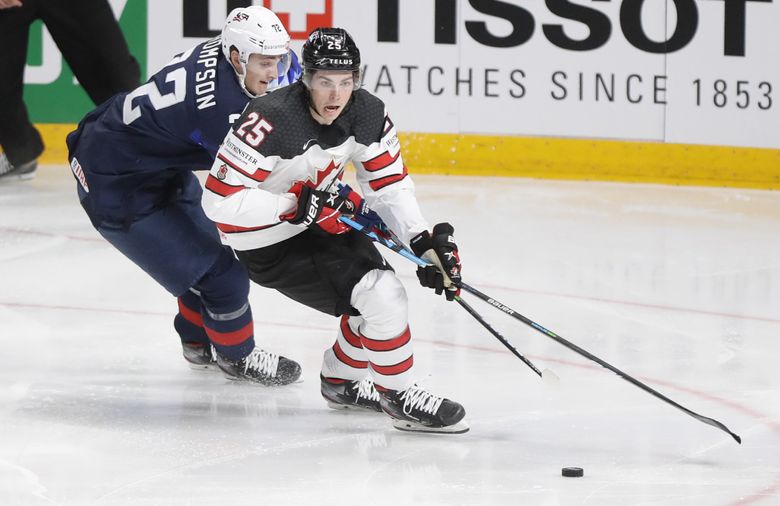
Tage Thompson’s omission from the American roster drew criticism from Buffalo and beyond, as the US brain trust opted for forwards with a more defensive bent over the likes of Thompson or Cole Caufield. The Canadians followed a somewhat similar strategy, adding Sam Bennett, Anthony Cirelli, Colton Parayko and Travis Sanheim as opposed to players with a more dynamic offensive skill set. Both Cirelli and Bennett have been more than adequate producers this season, with each scoring at roughly a point-per-game clip, so their inclusion certainly isn’t without merit. But both the Canada and US, the two teams with the deepest pool of players to choose from, made a conscious decision to include more well-rounded players on their roster, instead of loading up with upper echelon talent. 

The direction both groups took isn’t a surprise. These are NHL decision makers and it’s no secret what they value in their own team building, so it’s no upset that they chose to include players they feel can offer support in their own end. What is curious is the decision to treat this bonus best-on-best tournament so seriously. The 4 Nations event is an appetizer for next year’s Olympics. It’s a little tease, a thank you to the fans after nearly a decade without NHL players appearing in any notable international events. In a way, it’s a bit of a freebie. The slightly more casual nature of the event could have been embraced. The brain trusts of the participating nations were presented an opportunity to explore roster choices they may have otherwise shied away from at the Olympics. Instead, we saw both the US and Canada treat this Very Seriously and make a number of high-floor choices instead. 

Continue reading

The Instigator Podcast 13.12 – Execution, Coaching or Construction?

Buffalo’s losing skid hit four games after a dreadful loss to the Colorado Avalanche, erasing the club’s playoff advantage and leaving many questions about the current state of the team. We devote the first portion of this episode to breaking down the root causes of their issues, landing on roster construction as the primary issue with what could be another stalled season. 

We close the episode with a breakdown of the rosters for the 4 Nations Face-Off, specifically the US and Canadian rosters. We talk about the decision to bring more role players than overall talent on the US side and whether or not that will hurt them in this short event. 

You can find The Instigator Podcast wherever you listen to podcasts:

iTunes
Spotify
Stitcher
iHeartRadio
TuneIn
Google Play

Revisiting My 4 Nations Face Off Projections

Back in February I tried my hand at projecting the rosters for each country participating in the 4 Nations Face Off. With just a day until the rosters are officially unveiled, it’s time to revisit those projections and adjust for the first two months of the season and other factors.. 

Plenty has changed since February and today as players have gotten healthy, started the season hot or played their way off their respective rosters. We’ve also learned more about how each country plans to shape their roster. Bill Guerin has been quoted expressing his desire to have a balanced team as opposed to a star laden group. That was likely to be the case for all four teams as accounting for roles and better fits will almost always win out over selecting 20 players based purely on talent. Finland and Sweden, whose options aren’t as plentiful as the US or Canadian outfits, could potentially lean more towards current year production and players who have trended up to start this season. But overall I would expect them to try and craft rosters that are as well rounded as possible. I’m also curious to see if any of the teams sneak in a young player or two as they look ahead to the 2026 Olympics. 

Continue reading

Overthought: Development is the Key to Levi’s Demotion

Overthought is a semi-regular series that takes a look at some of the more interesting and notable tidbits shared by Elliotte Friedman in his weekly 32 Thoughts column. Each edition will feature some unique thoughts on the state of the Sabres or league as a whole before digging in on some of the notes from Freidman’s weekly column.

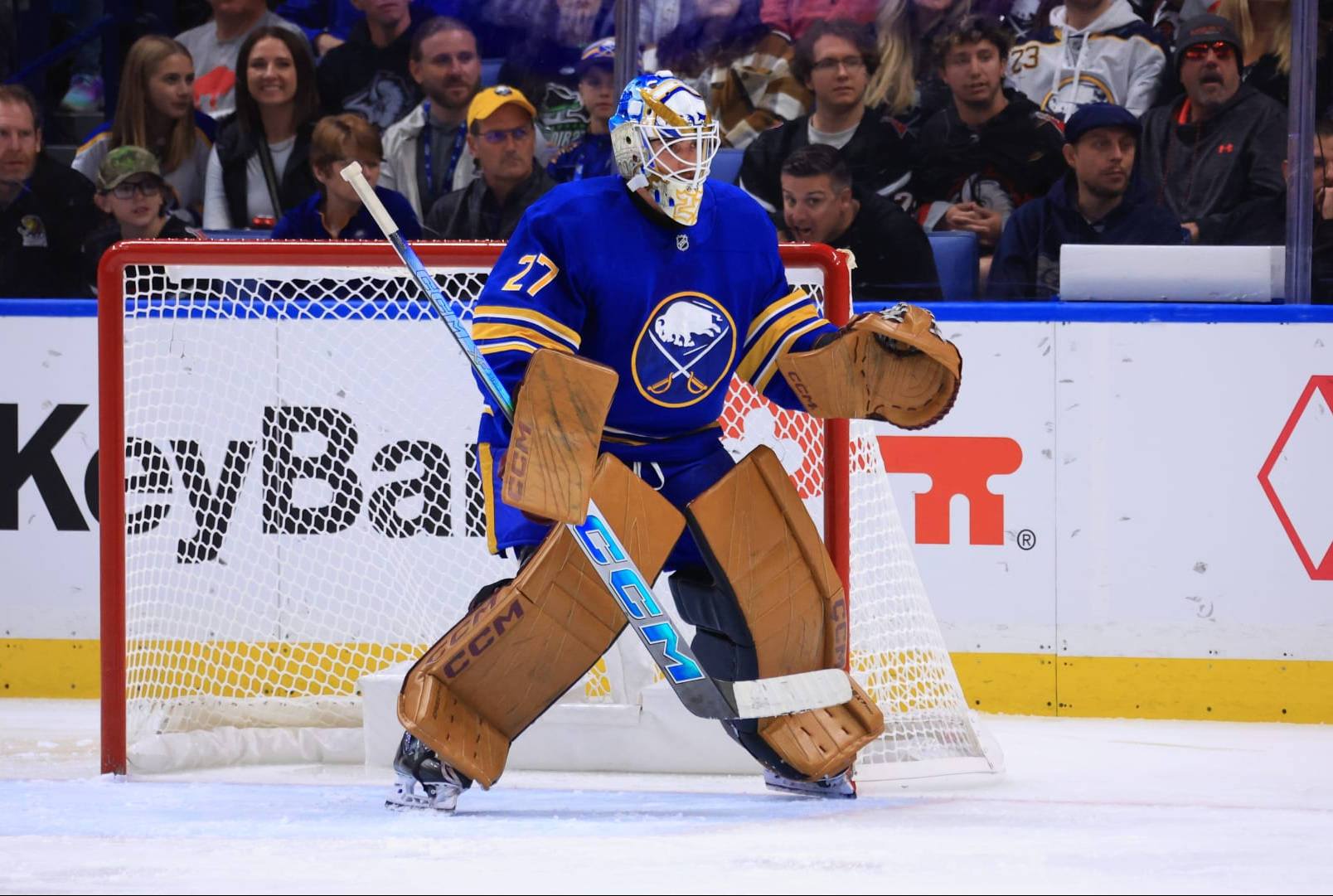
History repeated itself, as Devon Levi was sent to Rochester earlier this week, not far off from his initial demotion last season after a similarly rocky start to the season. 

Like last year, the choice to send Levi down is sound. His play wasn’t up to an NHL standard and the Sabres risked bleeding points with every game Levi started. This isn’t a sign of defeat for Levi, however. At 22 years old, he has a lot of runway before any definitive proclamation about his career can be made. He has only played 63 professional games and he will benefit from an increased workload in Rochester; another benefit he enjoyed last year as well. 

If the Sabres have made any error with Levi, it has been expecting too much of him too soon. He was steady in his initial seven-game cameo in 2022-23 after signing his entry level contract, but his consistency has waned since. Few, if any, goaltenders are capable of stepping into a full time NHL job from NCAA or junior. Those that have are either developmental exceptions or have had to work their way through regression in their play as teams and shooters have adjusted. Levi appears to be more the rule than exception when it comes to his development track. 

Continue reading

Sabres Recent Cap Spending Doesn’t Paint a Pretty Picture

The Buffalo Sabres are inching closer to their season opening games with nearly $7 million in open cap space to work with. The remaining cap space has been a point of contention within the fan base, as the Sabres are poised to open their fourth-straight season with a significant gulf in cap expenditure against the NHL’s cap ceiling. 

Buffalo opened their prior three seasons with $8,826,430 (2023-24), $18,648,333 (2022-23) and $16,435,864 (2021-22) in cap space. Barring an 11th hour acquisition, the 2024-25 season will follow suit. (Figures compiled from CapFriendly.)

Some context is required when evaluating Buffalo’s recent cap expenditures. The Sabres had jumped headfirst into a rebuild in the summer of 2021, shedding core players with large cap hits and they weren’t a year removed from trading Jack Eichel and his $10 million cap hit when they hit the ice with over $18 million in space in 2022. Still, over the past 10 seasons, the Sabres have only spent within $3 million of the cap on four occasions. Certainly a reflection of the on-ice results and direction of the front office, but also well out of line with Terry Pegula’s infamous oil well line from his introductory press conference. 

The team’s current cap situation has been well documented. Jeff Skinner’s buyout is largely responsible for the available space and Adams has been on record noting his desire to maintain flexibility for future extensions by not taking on long term commitments via free agency or trade. That does run counter to some of the team’s rumored activity in the summer when they were linked to the likes of Martin Necas, but taking it at face value, it’s fair enough to say that much of the future savings from Skinner’s buyout will be eaten up by extensions to the likes of JJ Peterka, Jack Quinn and others. But don’t forget that the greatest cap benefit to buying out Skinner, comes this season. The decision to buy him out is understandable, logical even given how Lindy Ruff has said he hopes the team will play. To not fully capitalize on those savings is questionable, if not downright reckless in a season as pivotal as this one.

Continue reading

Up Close and Personal with Fanatics in Vegas

I had the opportunity to head to Vegas during draft weekend to get an up-close look at the new Fanatics Authentic Pro jerseys that will be worn in the NHL next season. 

It was a surreal experience that included a trip to the Sphere for the first round of the draft and an afternoon spent with some other influencers, bloggers and podcasters in the hockey space, viewing the new jerseys in a suite alongside Fanatics leadership, including CEO Michael Rubin. 

We had a chance to walk through the suite to view and handle the jerseys and they look really great. As previously reported, there has been little change in design or material from the Adidas uniforms we’ve seen over the last several years ,with the exception of the dimpled shoulders. I’d grown fond of the Adidas shoulder design but removing them gives the jerseys a very clean and classic look, which is a net positive. The additional details on various crests (think the detailing on the Sabres bison) also carry over from the Adidas era, which provide every jersey a very rich appearance, especially up close. Anyone who had concerns about the look and quality of the jerseys in the shift to Fanatics can allay those fears.

Continue reading

The Instigator Podcast 12.40 – Weighing Brady Tkachuk’s Value

There’s been a lot of smoke surrounding Brady Tkachuk over the last few weeks. We dig into Tkachuk as a trade target and compare the public’s percieved value of Tkachuk versus what he should probably be traded for, if he’s traded at all. We also touch on the Sabres decision to not tender entry level contracts to three prospects, including Mats Lindgren and offer up a preview of the 2024 Stanley Cup Final between Florida and Edmonton. 

You can find The Instigator Podcast wherever you listen to podcasts:
iTunes
Spotify
Stitcher
iHeartRadio
TuneIn
Google Play

The Instigator Podcast 12.31 – Ready for Prime(time)

The NHL will be highlighted in a new reality series that will air on Amazon. We spend some time talking about the outlook for the show and some of the players we’d like to see highlighted by the production. We kick off this week’s episode discussing the Sabres west coast trip and offer up some thoughts on how things should unfold in the offseason before jumping into a conversation about rule changes and the upcoming Amazon series. 

Who Should Star in the NHL Amazon Series?

The NHL is diving into the waters of Drive to Survive and Full Swing as Chris Johnston announced that the league had reached a deal with Amazon for a show that will follow 10-12 NHL stars with an expected fall release. 

Interest in the various streaming reality shows has been at a fever pitch, with the productions helping to pull in new fans and new markets for the sports and athletes they highlight. Perhaps no sport has seen as much of an uptick than F1 since the first season of Drive to Survive. It’s fitting of the NHL to get on board with the athlete-centric reality craze but to hitch their wagon to Amazon Prime as opposed to Netflix where the other shows (and sports) have found so much success. Nothing is ever easy with this league. 

Kidding aside, this is a wonderful bit of news. The NHL has been pretty good about adjusting to the shifting dynamics of the modern athlete and finding ways to allow players to promote themselves. There is a notable evolution away from the team-centric mindset to one where the league puts its stars front and center. This is another step in that process and, barring a significant amount of overreach in the editing process, it ought to be a terrific product for the NHL and its stars to hang their hats on. 

In a perfect world we will get the sort of unscripted, natural behind the scenes content we were treated to in the early days of 24/7 on HBO. I’m not sure anyone the show plans to feature will be quite as outgoing as the best parts of 24/7, but the magic of these similar shows has just as much to do with the on-field exploits of the athletes as it does their off-field activities. So long as the product is genuine, I think this will be a hit with hockey fans. And with any luck, it will be a hit with non-hockey fans as well. 

Continue reading

Projecting the 4 Nations Face Off: USA

The 4 Nations Face Off will be the closest the U.S. has been to Canada in terms of overall talent at any point in best-on-best international play. The Americans beat the Canadians in 1996 and they were one shot away from another sweep in 2010, but neither of those teams were close to their Canadian counterparts on the basis of talent. The Americans have a young and deep group of players to select from and should be able to ice a roster that can go toe-to-toe with the Canadians. 

It’s a shame there isn’t a mechanism that would allow them to trade a goaltender to Canada for a forward or defenseman simply given how rich the U.S. is at the position. There are easily four, if not five, goaltenders worthy of consideration for this roster, a strength that will largely be squandered in a tournament that is so short. That isn’t to say the Americans shouldn’t feel confident in their goaltending, but it’s the one position where depth as impressive as theirs won’t really matter given the nature of the position. But goalie isn’t the only area where the Americans should feel confident. So long as they don’t repeat the mistakes of 2014 and 2016, they should have an immensely talented lineup at their disposal. 

Continue reading