There’s bound to be some whiplash switching from the 4 Nations Face Off back to regular season NHL action. The in-season tournament exceeded any and all expectations fans, media and probably even the players had for it, and there is a newfound level of interest in hockey as a result.
Big television viewership and a pair of thrilling games between the US and Canada made the event appointment viewing and served as an ideal reset for NHL participation in international play. There were a few additional thoughts I wanted to share looking back at the event that didn’t fit into the recap of the tournament that already ran on the blog.
USA Roster Build

A lot of the post mortem on Team USA will center around their fourth line and the decision to try and bring “role” players as opposed to players with a bit more talent. Much of that criticism will be justified. Chris Krieder, Brock Nelson and Vincent Trocheck got caved in defensively in the final and exacerbated the injury issues the US was facing given the lack of offensive pop they offered. Funny enough, had Auston Matthews or Brady Tkachuck cashed in one of the chances they had early in overtime, this would be totally overlooked. Instead, the team’s shortcomings are going to be placed in greater focus.
There is also a difference with this team and some of the roster choices made in 2016, 2014 and 2010. There are no Justin Abdelkaders or Jamie Langenbrunners on this roster. While they were picked to fill a very specific role, Krieder, Nelson and Trocheck are all top six talents on their respective teams. So it should be noted that the US did indeed evolve in how they chose their roster, they just may not have evolved enough.
As detrimental as that fourth line may have been, their lack of impact was magnified when Matthew Tkachuk went down. When you consider how little impact Jack Hughes had throughout the tournament, the US was effectively a two line team when it came to crunch time. I’m not sure things would have been much different had Tage Thompson or Clayton Keller on the roster, but I’m expecting a lot of debate about next year’s Olympic roster to focus on the right players vs. the best players.
In my view, JT Miller does all of the things you’d want in a fourth line role in this sort of tournament. He plays with some jam, you can lean on him to take defensive deployments and he’s still skilled enough to be elevated if need be. I think he shares a lot of similarities with Sam Bennett, especially in this sort of event. If Miller was penciled in as the “fourth” center and either Dylan Larkin or Jack Hughes were deployed above him, it would have offered the sort of balance the US braintrust was seeking while putting offensively talented players (most notably Kyle Connor) in better positions to succeed. Compare lines of Nelson (or Trocheck)-Miller-Boldy and Connor-Larkin-Thompson (or Keller) to the options at Mike Sullivan’s disposal and debate which grouping would be a better fit.
Experiments Paid Off
I think both the 3-2-1 point system and 10 minute overtime introductions were successful. The point system would really need a larger sample size to illustrate the true effectiveness, but Canada, Finland and Sweden were all alive entering the final day (although Sweden was eliminated before the puck dropped that evening). Sweden even avoided finishing last thanks to the OT loser points they grabbed before beating the Americans.
There has been some work done to illustrate how the system would have functioned in prior years. As those two articles show, there is little in the way of change in the final standings. The real change, which is the prime argument for those who support the system, is how it would alter the way teams play games. The overtime point wouldn’t hold as much value and teams chasing the standings would be incentivized to win in regulation. Three point games wouldn’t be eliminated, however, but the increase in value for regulation wins shouldn’t be overlooked. If a team looking to make up ground went on a run in regulation, they’d gain ground much faster than in the league’s current format. I think the league would be wise to revert to a 1-8 playoff seeding with the 3-2-1 point system.
It is easy to be intoxicated by the overtimes we were treated to in the 4 Nations as the star talent makes 3-on-3 much more attractive. However, I think it’s important to note that neither game needed the full allotment of time and the game that went beyond five minutes, ended under seven. That’s some decent evidence to work on as we saw in Canada-Sweden that teams will need to go deeper into their lineup to keep players fresh, especially if someone gets stuck for a long shift like Victor Hedman did, and the extra wiggle room for scoring in the run of play should help cut down on shootouts.
TV Presentation
There were a number of new wrinkles added to the TV broadcasts that on balance appear to have landed 50-50 in terms of favorability. For example, Elliotte Friedman noted that the longer commercials and shorter intermissions were not well received by the players. Similarly, the later start times compared to what was advertised on the broadcast didn’t appear to be all that popular. But the on-ice camera for goal celebrations was widely applauded and the increased use of the ref cam had its merits as well.
This wasn’t the first time we’ve all seen a ref cam used and while I think switching to it for the opening faceoff for each period was a really poor application, it’s still a novel option for replays. I find it hard to believe that anyone felt the angle for the center ice draws produced anything of value for the viewers, but I could be wrong. But the other additional replay angles we were shown were great. I really liked the overhead angle that was added, the NHL may never have a skycam like the NFL, but this felt like the closest we could get and it worked great. You could tell that having this as the centerpiece of the NHL’s broadcast efforts allowed for more cameras and more replays to be leveraged. That’s a good sign for the playoffs and Cup Finals when a similar level of effort will be applied to the TV product.
Putting a camera on the ice for the post-goal bench celebration was a stroke of genius and I hope we see that continued during national broadcasts and into the playoffs.

Big thumbs down to ESPN for whatever they hoped to accomplish with the lower third overlay of players on the ice. It was way too big on its initial introduction to the point that you couldn’t see players entering the zone if they were carrying the puck along the penalty box side of the ice. A later size adjustment wasn’t any better, as names were cut off on the bottom of the screen. We don’t need to know who is on the ice at all times anyway. Credit for trying something new, but this one wasn’t a winner.
If NHL and its broadcast partners come away from this tournament with a few new replay and broadcast options and the on-ice camera for goal celebrations, their experiments at the event will have been a win. I’ll be curious to see how they try and expand the use of that on-ice camera man. Perhaps they trade out having officials face the camera over the penalty box for a closer shot on the ice when announcing penalties and goal reviews. We’ll see what comes next once the league and the networks dissect the last two weeks.
Blueline Gains
Plenty has been made about the shrinking talent gap between the US and Canada, especially in net where the US talent pool was seen as much deeper than the Canadians (though Jordan Binnington did his part in erasing some of that narrative). However, I’m not sure enough attention has been paid to the American blueline. Jaccob Slavin certainly got his due credit throughout the tournament, but of all the position groups, I think the American blueline has made the greatest strides.
Taking into account the players lost to Team North America in 2016, no US blueline from the three previous best-on-best tournaments even come close to the group the US put out this year. Jack Johnson and Tim Gleason are long forgotten memories compared to Brock Faber, Charlie McAvoy, Slavin or Zach Werenski. Oh, and Quinn Hughes didn’t get to play. Maybe they don’t have a player who can eclipse Cale Makar, though Hughes is awfully close, but I think they might just be a touch better than the Canadians from top to bottom.
Return to Royal
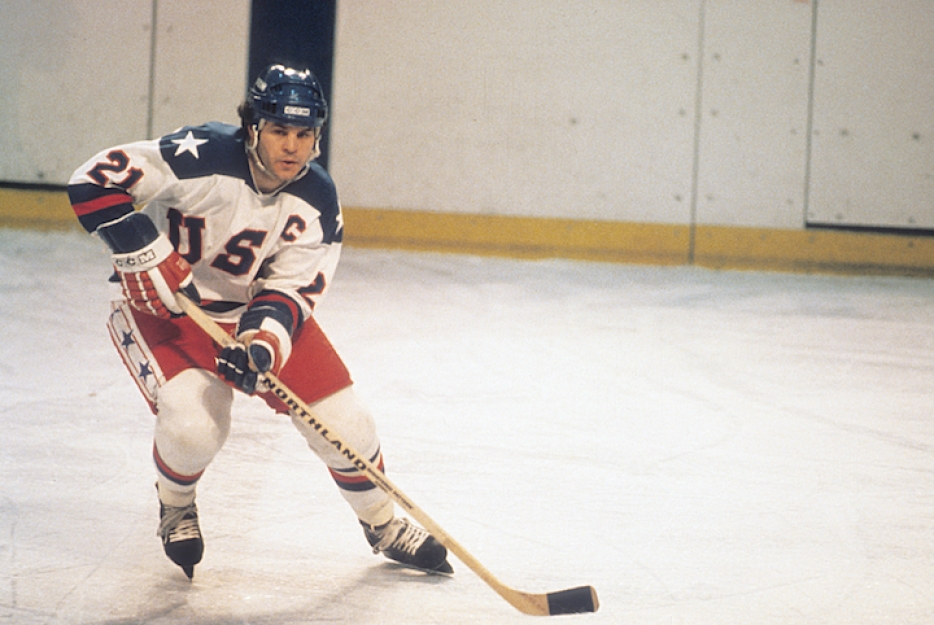
It’s high time that the US and Sweden dump navy blue in favor of royal for their next round of uniforms. USA Hockey has leaned into the 1960 uniform design at junior tournaments for several years and the senior team got in on the fun at last year’s World Championships (although their blue uniforms were definitely navy). Save for the 2002 Olympics, the best US uniforms have always been royal based and that should be the case going forward. And while I’ve always been a fan of the mismatch of white helmets on their blue uniforms, a switch to royal would require both white and blue helmets.
The same applies to the Swedes. The brighter shade of blue looks a million times better than the dark blue they wore at this tournament.
Keep the Trophy
For a one-off tournament, the NHL did a pretty good job creating an attractive trophy and it’s a shame to think that it may only be used this one time. It’s definitely a better looking trophy than what was used for the 2004 and 2016 World Cup of Hockey. Why not repurpose it for the future World Cup competitions? Given that the 4 Nations served as a reset for the NHL’s involvement in the international hockey calendar, the opportunity is there to reshape the World Cup of Hockey as they see fit. Adopting this new trophy would be one way to do it.
 Two in the Box



I have an additional criticism. I would like to have seen the player’s team better identified. Maybe a shoulder patch in addition to the small helmet sticker.
Not all hockey fans know where all these players are playing in the NHL. How many Sabre fans don’t watch as much hockey because of their playoff drought? How many NHL fans knew of Henri Jokiharu and that he plays for the Sabr
LikeLike
People tuning in may also not realize quickly that Brady Tkachuk plays for Ottawa. More NHL association would have been a plus.
LikeLike