The Florida Panthers are back-to-back Stanley Cup Champions and have played in the Finals for each of the last three years. They have become the NHL’s gold standard in practically every aspect of their operations and dismantled the Eastern Conference before dispatching the Edmonton Oilers for the second-straight season.
But how did they get here and what can be learned about this three-year run of dominance?
Drafting and developing is regularly referenced as the clearest path to success for rebuilding NHL teams. If done right, constructing a strong pipeline of talent at key positions (read: center and defense) through the draft will set up a team for long term success. Florida’s success runs counter to that a bit, as only four players who appeared in the playoffs this year were drafted by the Panthers. One of whom, Mackie Samoskevich, only appeared in four games. Of course, two of the players who the Panthers drafted are Alexsander Barkov and Aaron Ekblad, picked second and first respectively in their drafts, but 19 of the 24 players rostered in the playoffs were acquired via free agency or trades.
I’m not sure this means Florida has cracked the code on NHL free agency as the many of their signings were depth pieces such as A.J. Greer, Tomas Nosek and Nate Schmidt. But free agency has brought several key contributors to Florida, most notably Sergei Bobrovsky, Niko Mikkola, and Carter Verhaeghe. What is fascinating is how the Panthers navigated their cap outlay with their free agents. Aside from Bobrovsky’s $10 million hit, no free agent on the roster was signed to a cap hit north of $5 million. More specifically, none of their depth forwards have a cap hit that exceeds $900,000. The Panthers have been consistent in not chasing bad money or term. They don’t find themselves underwater on bottom six players thanks to those low cap hits and short contracts and that has allowed them to push cap to more important parts of their roster. For example, it’s easier to spend $11 million on a third line of Eetu Luostarinen, Anton Lundell and Brad Marchand when your fourth line only counts for $2.4 million.


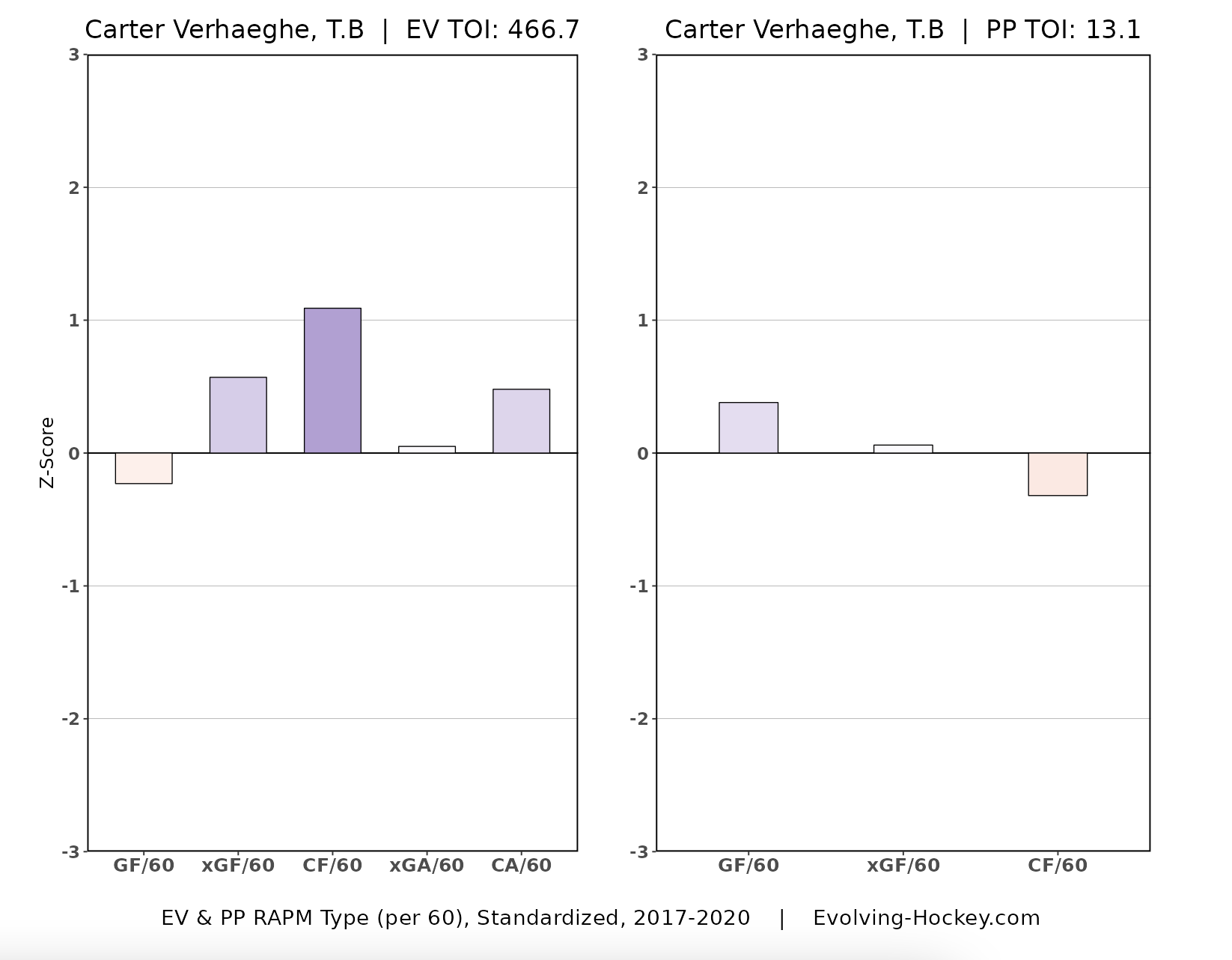
The sort of player the Panthers have pursued in free agency (and elsewhere) is a key factor. Florida’s roster is littered with players who were on-ice drivers at previous stops. Carter Verhaeghe and Evan Rodrigues stand out in this regard as both had quality underlying impacts at even strength before the Panthers signed either player. In Florida’s system, where their depth can take advantage of mismatches, both players have seen their underlying impacts blossom.

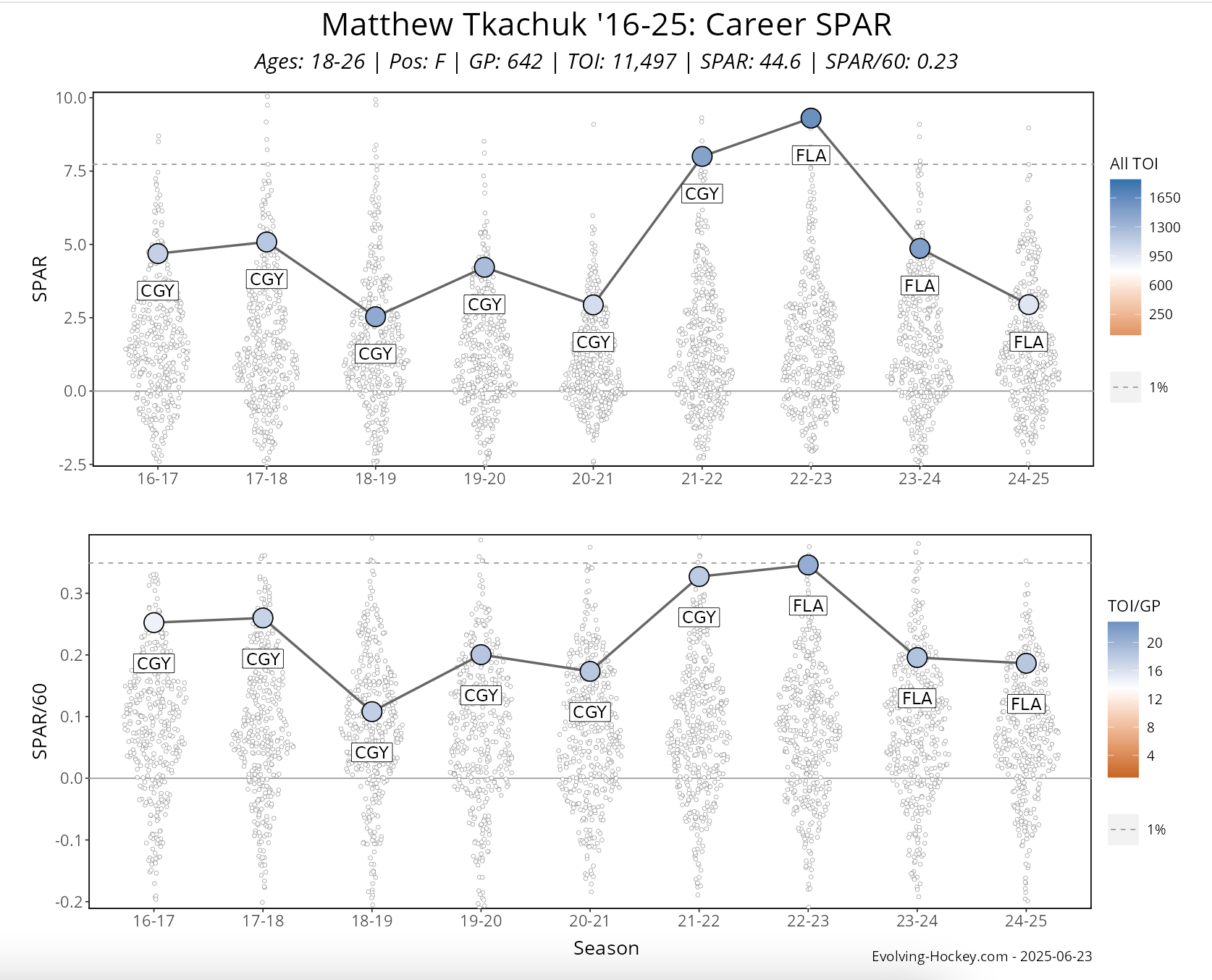
That same logic has followed in the trade market, where Bill Zito has used aggressive moves to round out his core. Sam Reinhart and Matthew Tkachuk each arrived via offseason deals where the Panthers offered up significant assets. It wasn’t exactly a secret that Reinhart and Tkachuk were both star-level talents. Yet, both exhibited strong underlying metrics in Buffalo and Calgary, respectively. Both are top six talents who have become cornerstone players for the Panthers and, most importantly, both were impactful players before the Panthers sought to acquire them. And once they were in Florida’s room and system they helped elevate the Panthers to a new stratosphere.

Not all of Florida’s acquisitions were analytical darlings. Gustav Forsling had been traded twice before the Panthers got him on waivers. His results were nothing to write home about prior to his arrival in Florida as well. Similarly, Mikkola wasn’t heralded as a play driving defenseman in either of his prior two stops. Naturally, both have been terrific for the Panthers, particularly Forsling who has become a star In South Florida. So they’ve found their fair share of diamonds in the rough who blossomed in the Panthers’ system.
Their key acquisitions, however, share a positive analytical throughline. The Panthers braintrust rightly identified players who drove play with their respective teams and knew they would have a similar, if not better effect in Florida. They didn’t overspend on intangible skills like toughness or leadership. They spent premium assets to find quality players who could push their project to the next level and they have two Stanley Cups to show for it.
That approach – targeting players with the right skill set and underlying impacts – has allowed the Panthers to craft a deep, well-rounded roster. They haven’t been shy about spending premium assets to acquire that talent, and they’ve paid those players handsomely as they have performed. They will have some difficult cap decisions to make in the wake of this second Cup win. Florida has a number of key unrestricted free agents who will put a great deal of pressure on their cap if they are retained. They also have new contracts which have triggered, those will compound some of their difficult cap decisions – most notably any attempt to retain Bennett, Marchand and/or Ekblad.
Salary cap headaches are a small price to pay when you’re celebrating back-to-back Stanley Cup championships. The Panthers have demonstrated that their evaluation process consistently targets the right players with the right traits. They regularly find play drivers who provide exceptional depth and, occasionally, high end skill. They haven’t wasted time on players who will make them tougher and they have have a pair of Cup rings as a result. Seems like a sound strategy to me.
 Two in the Box