Overthought is a semi-regular series that takes a look at some of the more interesting and notable tidbits shared by Elliotte Friedman in his weekly 32 Thoughts column. Each edition will feature some unique thoughts on the state of the Sabres or league as a whole before digging in on some of the notes from Freidman’s weekly column.
The initial rosters for the 4 Nations Face-Off have been set and barring injury replacements, the Sabres will only be sending two players to the event. Rasmus Dahlin with Sweden and Ukko-Pekka Luukkonen with Finland.
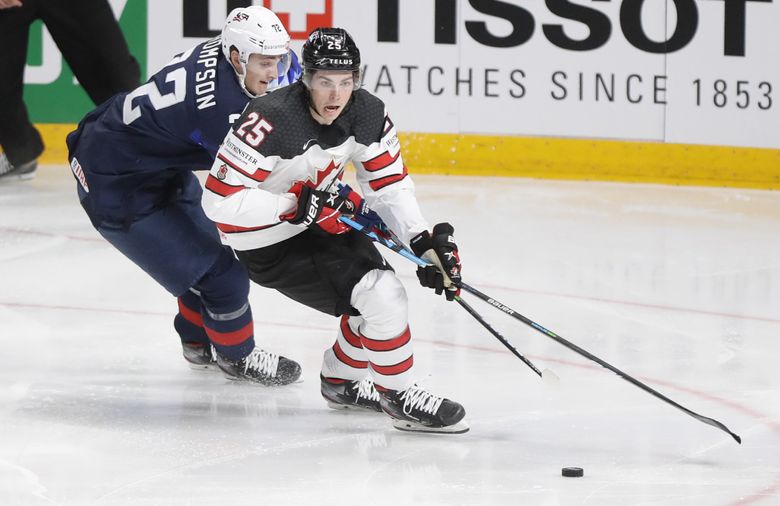
Tage Thompson’s omission from the American roster drew criticism from Buffalo and beyond, as the US brain trust opted for forwards with a more defensive bent over the likes of Thompson or Cole Caufield. The Canadians followed a somewhat similar strategy, adding Sam Bennett, Anthony Cirelli, Colton Parayko and Travis Sanheim as opposed to players with a more dynamic offensive skill set. Both Cirelli and Bennett have been more than adequate producers this season, with each scoring at roughly a point-per-game clip, so their inclusion certainly isn’t without merit. But both the Canada and US, the two teams with the deepest pool of players to choose from, made a conscious decision to include more well-rounded players on their roster, instead of loading up with upper echelon talent.
The direction both groups took isn’t a surprise. These are NHL decision makers and it’s no secret what they value in their own team building, so it’s no upset that they chose to include players they feel can offer support in their own end. What is curious is the decision to treat this bonus best-on-best tournament so seriously. The 4 Nations event is an appetizer for next year’s Olympics. It’s a little tease, a thank you to the fans after nearly a decade without NHL players appearing in any notable international events. In a way, it’s a bit of a freebie. The slightly more casual nature of the event could have been embraced. The brain trusts of the participating nations were presented an opportunity to explore roster choices they may have otherwise shied away from at the Olympics. Instead, we saw both the US and Canada treat this Very Seriously and make a number of high-floor choices instead.
I do understand the decision. You only get so many chances to run the show for your country internationally and the need to get it right is going to weigh on everyone involved. But I can’t help to think that this was a bit of a missed opportunity to be better informed for 2026, especially for the Americans. If this is meant to be at least a partial audition for the Olympics, why not get a look at players who will be firmly in their prime come next February? I understand that Chris Kreider kills penalties and has played in the playoffs, but will he be a viable option at 34 years old? He certainly won’t be if his production through 22 games doesn’t turn around. Would Bill Guerin and others involved with USA Hockey not learned more about what they have by bringing Cole Caufield along? Would they not have learned more about their talent pool seeing how Clayton Keller fared in this setting as opposed to Brock Nelson? The Americans overthought their roster for the 2016 World Cup when they brought along the likes of Justin Adbelkader, Brandon Dubinksy and both Erik and Jack Johnson. They didn’t go that extreme with their choices for the 4 Nations, but it sure seems like they could have taken the opportunity to learn more about portions of their player pool instead of bringing a trio of high-floor, low-ceiling choices.
Conor Garland and Stefan Noesen have far stronger possession credentials than Kreider or Vincent Trocheck, and also fit the bill as role players. The US could have have dipped their toes in on those two as well. Though, trying to thread the needle in the bottom of the lineup with those sorts of role players feels far too close to bringing Justin Abdelkader to the 2016 World Cup.
2. Let’s look at the other countries. On paper, this might pass the 1996 World Cup champions as the best Team USA I’ve ever seen. But you’ve got to win to truly snare that honour. My biggest surprise was no John Carlson. He’s a great player, and watching Washington without him last season convinced me even more he’s one of the best defenders in hockey.
The biggest criticism coming GM Bill Guerin’s way was that he didn’t select offensive sensations like Cole Caufield and Clayton Keller (I’ll get to Tage Thompson in a minute). A theory: Guerin knows scoring won’t be the problem. His back-end isn’t the biggest, so he went with the likes of Chris Kreider and Brock Nelson because he may need that size to disrupt opponents before they even get to the net.
I was surprised that John Carlson didn’t get the nod for this event. He’s a play driving machine and contributes well at even strength. With that in mind, it’s hard to nitpick any of their choices on the blueline. Maybe you swap him for Noah Hanifin, that’s about it.
Another thing that stood out to me about the inclusion of Trocheck and Nelson is that the Americans will have seven centers on their roster for this event and at least two – Dylan Larkin and JT Miller – will be right at home filling roles in the bottom six. I’m not sure they needed to backfill with two additional centers for those “checking” roles when they’ll already be very well equipped down the middle. Plus, in an event that’s so short, they almost certainly could have gotten by with at least one more “luxury” selection like Caufield. We’ll see how it shakes out for the US. Will there be a glaring need for heavy players like Krieder, Nelson or Parayko or will this be an all gas, no brakes sort of event?
3. Okay, Tage Thompson. Of anyone who wasn’t picked, he was the guy who shocked me the most. Kreider’s got 123 playoff games, Nelson 78, Vincent Trocheck 56 (including 20 points in 16 games last year). Thompson is still waiting to make his NHL playoff debut. Making the post-season is bigger than any one player, but I couldn’t help but watch Buffalo’s collapse Tuesday against Colorado and wonder if the Sabres’ inability to build momentum penalizes Thompson.
While the postseason qualifier is a little silly, especially given Thompson’s production this year and some of the positive defensive contributions he made while hampered by injury last season, I’m not too broken up about him missing the boat. Other people can debate if he should’ve been there or not. He’s got bigger things to worry about at this point. But I can’t help but wonder if the playoff penalization is a reflection of Buffalo’s overall dysfunction in the eyes of the NHL. That dysfunction manifests itself in the 13-year playoff drought, and maybe that’s what Friedman is getting at when he refers to the Sabres “inability to build momentum.”
4. A proud Swedish reader says Canadians and Americans have tunnel vision about this tournament, completely disrespecting the Scandinavian opposition. The Swedes are very, very strong — more than capable of reaching the final. It’s a short tournament where two teams won’t even get a championship shot, so you have to feel good about your goaltending. Sweden does.
What also struck me was they didn’t go as young as they could have. Victor Hedman said he’s played with almost everyone on the roster internationally. Yes, there’s Leo Carlsson, but no William Eklund, no Fabian Zetterlund — both rising with Macklin Celebrini in San Jose. By choosing Viktor Arvidsson and Gustav Nyquist, Sweden’s sending a message that this tournament isn’t about prepping for the future. The time is now.
I think the Swedes are a really good bet to wind up in the Finals. On paper, this is very much a three-team tournament. The Finns had a massively shallow pool of defensemen to pick from and don’t look especially threatening up front. But the Swedes may be getting underrated a bit. Their goaltending is every bit as good as the Americans, and could prove to be better once the games begin. The Viktor Arvidsson selection is a bit puzzling and I’d love to know if they’re regretting naming Mika Zibanejad as one of their first six players, but the top of their roster is really, really strong.
7. Injury replacements: anyone with a “legitimate injury” can be replaced up to and including Feb. 12, the opening day of the event.
Damning to Henri Jokiharju (and the team that opted to re-sign him) to be passed over in favor of a player with a significant knee injury who has only gotten into two games this season. That speaks volumes to how poor he’s been for the Sabres. However, I can’t help but wonder if the Finns are using the injury replacement option to maximize their flexibility with regard to Jani Hakanpaa. That spot could very easily be Jokiharju’s if Hakanpaa doesn’t get healthy by February, but the Finns didn’t want to fully shut the door on getting Hakanpaa on the roster. Either way, Jokiharju being the odd man out is a tough look for the player and his club.
11. The Rangers have lost six of seven, and held on for dear life for their one victory, 4-3 over Montreal. Two of those defeats came before GM Chris Drury let teams know he’d be willing to discuss Kreider and Jacob Trouba, the rest as the team absorbed the aftershocks. Clearly, Drury saw 12-4-1 as a mirage, with underlying numbers indicating the Rangers bleed chances and were trending badly. It’s Drury’s job to have big-picture vision. Players think differently. They care about Ws and Ls, especially these Rangers, knowing they will be judged in April, May and June, not November.
14. Drury is working to figure out what he actually can do, up and down the roster. Trade protection — limited or full — is a hurdle. Ottawa is being very careful about what it says, but I do think that’s a team the Rangers have talked to.
The Rangers have bled shots for quite some time now and three coaches later their core issues remain the same. Good on Drury for identifying that it’s time to reshape his roster. Curious to see if he finds a home for Trouba and/or Kreider what he will do with the additional cap space. This is not a team that’s looking to rebuild, so any return he brings in for Krieder, Trouba or anyone else he may move, is just more ammunition to improve other areas of the roster. And the cap space equates to more flexibility to make those deals. Fans are certainly going there, but if there’s any thought that Brady Tkachuk could be pried out of Ottawa, a big market club with a sudden glut of cap space and a desire to get over the hump in the Eastern Conference would be a prime suitor.
In other news, the Sabres still have nearly $7 million in cap space and have made approximately 75 picks in the top 60 of the last three drafts. I wonder when they’ll try and utilize those assets.
 Two in the Box