It’s another edition of the mailbag and this time we’re tackling what the Sabres would need to change to adapt to the physical nature of the playoffs, how many new faces might be on the roster and Kyle Okposo’s recent comments on this year’s Sabres.
@TedPitney – What roster/philosophical changes are needed to actually win in the playoffs?
I love this question. I think you have to weigh the traditional idea of toughness (big, heavy, fighters) vs. the more modern approach with players who are effective at both ends of the ice but play the sort of gritty, heavy game that tends to come out in the playoffs.
We’ve seen in the past that just chasing the archetype of toughness doesn’t automatically make your team tougher. The Steve Ott and John Scott acquisitions didn’t make the Sabres any more difficult to handle on a nightly basis. There was still something missing with that group despite the changes on the roster. There is a level of acceptance needed to adopt the right mentality to play a certain way each night, especially in the playoffs. You see a lot of big hits in the playoffs but I also think there’s a willingness to take one extra poke or lean on a player a bit more than you would on a Tuesday in December. It’s those little things where you’re just a little bit chippier that becomes more pervasive as these series progress.
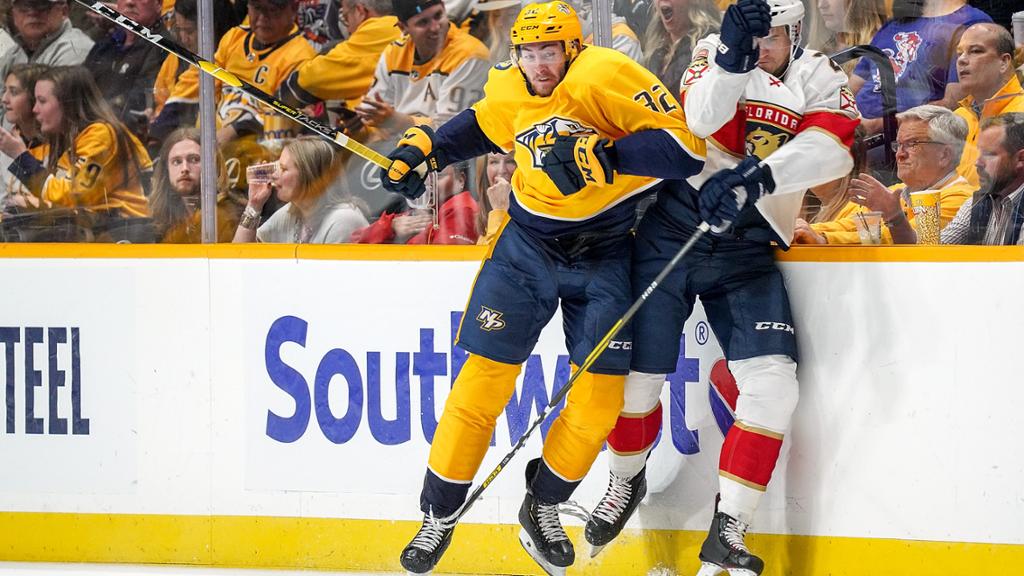
Being harder to play against is a phrase that gets overused these days, but I think Kevyn Adams saying they need to be more “abrasive” is a good way to describe what they need to add. Just plugging in a fighter who can offer eight minutes a night isn’t going to be what changes the way the Sabres play. Finding a couple more players who have that edge to their game (think Yakov Trenin) will be on Adams’ shopping list, but there needs to be more done in the room, from the coaching staff and the rest of the roster to adopt that mentality as well. It’s as much about identity as it is personnel.
@kevinpalmer – What is the point with a prospect where you either need to give them a shot or trade them? When does their value as a piece decline?
There’s no one size fits all answer to this because of how development tracks differ for each player. However, I think after one or two North American pro seasons, teams will have enough information to know whether or not a prospect is ready to take the next step. Finding a roster spot for them is a different challenge, but generally speaking, a couple AHL seasons will provide ample evidence for a player’s outlook.
That does differ from figuring out when a prospect’s value starts to decline. I’m sure someone has done the research to chart out the actual trends but this is just my gut feeling. I think a highly drafted prospect would tend to carry the most value in their first or second post-draft seasons so long as their production continues to increase. It’s different for later picks since they tend to be late bloomers. First round picks will always carry that pedigree, but I think their value will tail off after two or three post-draft seasons.
The first player I thought of for this was Nathan Gerbe. He was a fifth round pick in 2005 and he needed time to develop. By 2007-08 he was one of the best players in college hockey. He led the nation in scoring, was a Hobey Baker finalist and was the tournament MVP for Boston College. He followed that up by winning AHL rookie of the year after a 30-goal season for Portland in 2008-09. Gerbe’s value to the Sabres wouldn’t have been higher than it was in those two years which came three and four years after his draft season. If there was ever a time to trade him, it would have been in one of those two years, but they would have moved him without seeing what his value was at the NHL level.
Compare his track to Alex Nylander who was traded for a fellow first round prospect three years after being drafted, but was dealt for a sixth round pick this season.
@MikeGeorge83 – Do you guys think there will actually be any trades or significant signings? Or are we just going to get some gritty 4th line guys?
I’m not going to look past the potential for Adams to be keeping his cards close to his chest. There wasn’t much indication that he was going to make the Casey Mittelstadt trade, and that was a pretty significant deal. So, I’ll take his public statements at face value, but I expect he’ll be trying to make a big move or two. Whether or not he finds a partner is a different story, but I think there’s room and ammunition to make at least one notable acquisition.
@JimBobv2 – How many new to the organization NHL players do you expect there to be on the opening night roster? Or, you could just do the O/U 2.5 new guys and O/U 2.5 rookies on the opening night roster.
I think the hope is that one of Matt Savoie, Jiri Kulich or Isak Rosen earn a roster spot out of camp. I’m not sure if the Sabres will leave the door wide open for them, but I think Adams wants to give them a fair shot. But I think you’re looking at room for only one of their rookies for next season.
My expectation is that Adams will have three or four outside additions on the roster. A third line center, one or two new bodies for the fourth line and a defenseman. The fourth line could be filled internally, but Adams’ stated desire to change the identity of that group will take him outside the organization. There’s room for upwards of three new bodies on that line alone, depending on his approach. Adams confirmed that he’s been chasing a center for the middle of the lineup for quite some time. I see no reason why that would have changed. That’s also the spot best positioned for a significant acquisition.
Defense is a bit of a toss up given their incumbents, but if Henri Jokiharju heads out, they will likely need to find someone to play with either Dahlin or Power in their top four.
@Denni5Hendrick5 – If the Sabres make the playoffs next season what will be the reasons why? (i.e. powerplay becomes competent, players have bounce back year, rookies make impact)
So long as Ukko-Pekka Luukkonen doesn’t regress heavily and the power play comes back up to league average, they should have a very good look at a playoff spot. A Luukkonen and Devon Levi duo will carry some risk but if they trend the way they each ended the season, they ought to be a competent duo. If the power play changes bring them back up to league average and there is a rebound in production from the likes of Tage Thompson, Dylan Cozens and Alex Tuch, they shouldn’t have much trouble pushing past the 90-point mark and into the thick of the playoff chase.
@dangambino6 – What’s the most realistic major shakeup you could see happening?
We touched on this on the podcast and it’s a tough one to crack. If the goal would be to shake up the roster and really send a message, you’re talking about trading away a key, core piece. That means you’re picking from the likes of Dylan Cozens, Rasmus Dahlin, Owen Power, Tage Thompson or Alex Tuch. We discussed Power and Tuch on the podcast and I think each would be fine candidates. I feel Tuch edges out the others listed as he seems to carry the most weight as a leader outside of Dahlin and he’s slightly more expendable than Power. We know the Rangers called on him at the deadline, so there’s interest in him around the league and the team isn’t lacking in talent on the wings in the pipeline. There is enough there to justify a potential deal and in terms of keeping things somewhat realistic, Tuch would be the nominee here.
@Kozyshank – Fix the NHL Draft Combine. What would you add/subtract/tweak?
The easy answer is an on-ice component, but it’s not quite that simple. A scrimmage doesn’t make a ton of sense since you already have the various top prospects games that are played each year in addition to international best-on-best competitions. So there isn’t a pressing need to see all of the draft eligibles play each other. Skills competition drills offer little to no value as well. The reality is that the nature of the sport doesn’t lend itself well to the sort of on-field testing seen at the NFL combine.
The best option would be to create some sort of dynamic drill set that combines multiple skills at once. On-ce work that calls upon players to not only demonstrate skating and stickhandling acumen, but the ability to pick out teammates and diagnose plays as well. If done right, it could make for a decent TV product, but I think it would be very difficult to develop something that created value for scouts and managers.
@Laura_Opiela – Thoughts on Okoposo’s comments about knowing the team wasn’t going to get to the playoffs by November? And how the coach was able to hang in for the whole season?
This adds to the list of shortcomings that have been chronicled since the end of the year. It’s not new information so much as it reinforces what the players and Adams said in the wake of Don Granato’s firing. Your guess is as good as mine as to why Granato survived the whole season. The most damning thing that’s been said came from Adams when he talked about how he didn’t like how they looked in camp. You would think that would raise all sorts of red flags on letting the coach go, but he made it all 82 games.
This also makes me question the influence the leadership group has (or had) in the room. If Okposo and Zemgus Girgensons, their other established leader, couldn’t help snap the players out of their funk, did management put their faith in the wrong players for too long? Hopefully a fresh slate with a new coach and new captains is what was needed in Buffalo’s locker room.
 Two in the Box